
The Difference Between an Audience and a Community (And What it Costs Your Business to Confuse the Two)
Would it be totally out of place to geek out and connect this blog topic to the recent results of the 2026 Western Conference Finals? Maybe, but it’s fine.
I’m not usually the type to jump on a bandwagon of anything. If anything, I make things work harder to get my attention. And while I wouldn’t call myself a Spurs fan, I will say Victor Wembanyama has made me a fan of his.
He’s clearly one of the most talented players in the league right now, and he’s got the numbers to prove it. But exactly the way I think about metrics for my clients, it’s not the numbers that make me want to root for him. It’s his dedication to his community.
He’s a player that could easily coast on his individual brilliance, but instead, he invests in the people beside him, and that’s exactly the type of marketing we build for our clients.
Most business are building an audience, not a community.
It’s an easy mistake to make, and can be an expensive one to make if left uncorrected.
Let’s spot the difference together.
An audience is made up of people who watch.
they scroll
they might follow, then they see your content move past them in their feed.
They might like posts, they might not.
Their relationship to your business is passive.
They’re consuming what you put out, but the moment something more interesting comes along, they forget, and move on.
A community is made up of people who feel like they belong.
they’re invested
they think of your cafe or restaurant when they’re deciding where to meet a friend Saturday morning
they tag your business without being asked
they tell people about your business with enthusiasm you can’t buy
they comeback because your space has become part of their lives
What this looks like in practice.
I worked with a client who came to us with clear goals: grow the numbers, increase reach, get in front of more people. And while these aren’t the wrong goals, it seemed to be their only goals.
Success, for them, was measured by follower count and impressions. How many people saw the content, how far it reached, and when those numbers went up, the work was working. When the numbers plateaued, something needed to change.
What the framework left out was the foundational questions underneath the numbers: “Who are these people, and to they feel anything when they see our content?”
The contract didn’t continue and they decided to move on to a larger agency with higher production value. From the outside, the content was more polished, more professional, and maybe found more reach.
But when I looked at their numbers recently, something else had happened too. Their engagement dropped and the community content (the post that felt like them, that spoke directly to their people, and invited response) disappeared. What remained was beautiful, but also distant.
High reach, low connection. A growing audience with a shrinking community.
The cost of confusing the two is accumulated slowly, and is part of what makes it so easy to miss until it’s already done its damage.
Why hospitality businesses feel this more than most.
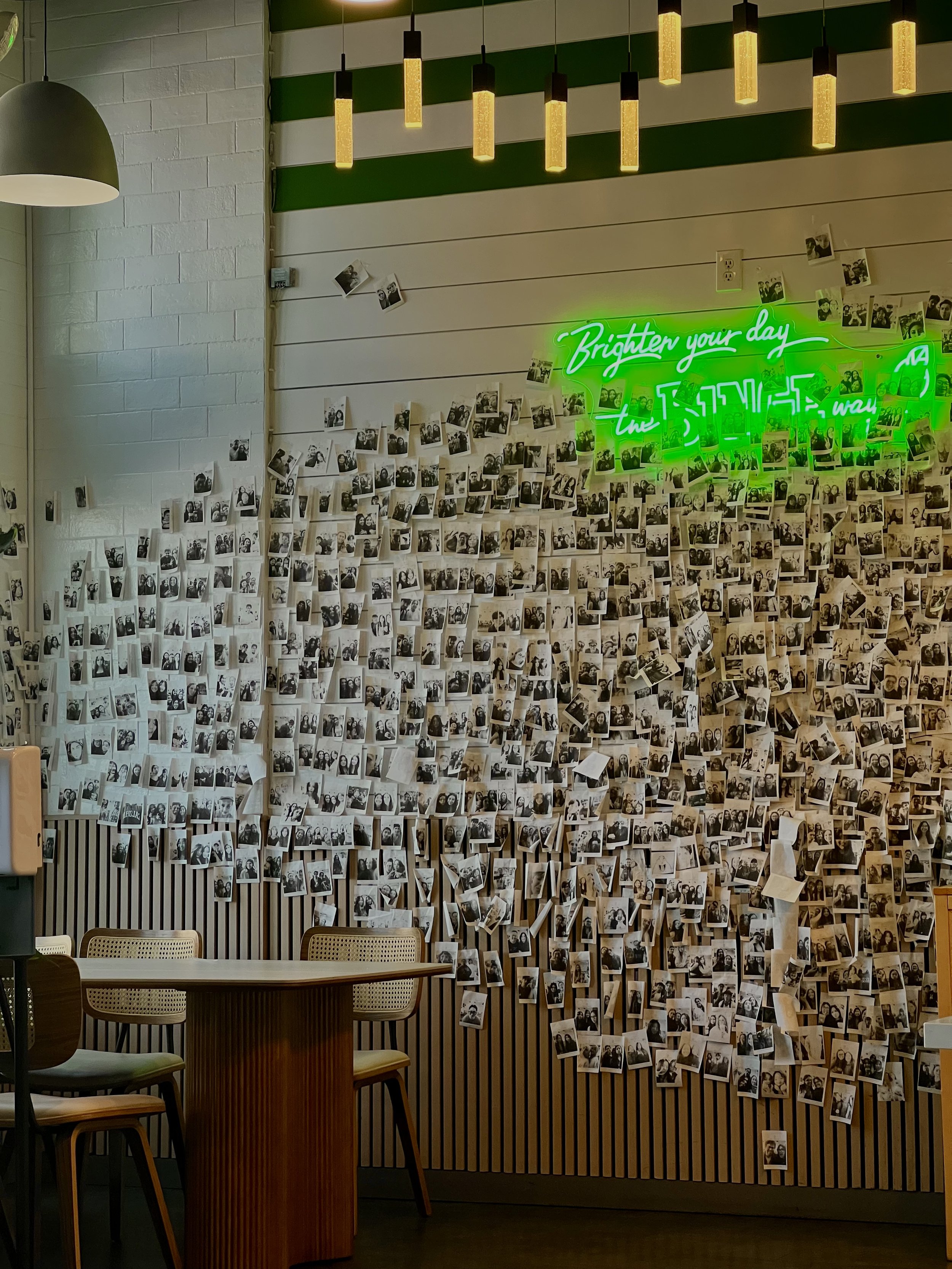
If you run a cafe, a restaurant, a boutique studio, or any space where people come to experience something together, you already understand community on an instinctive level. You know what it looks like when a regular brings in a friend and introduces them like they’re welcoming them into a little piece of their world. It’s when your staff already knows people’s order before they ask.
That’s community. You’ve been building it inside your business everyday.
The real questions is whether your social media reflects that or if it’s doing something else entirely.
Here’s what tends to happen: a business that has genuine community in-person usually defaults to audience-building online. They post what looks good, track what reaches, then optimize for visibility, making connections an afterthought.
What community-building looks like on social media.
It looks like content that speaks to a specific person, not just a general feed. It makes someone feel like it was made for them and is something they could care about.
It looks like community management that’s proactive by showing up in spaces where your ideal customers already spend time. It’s genuine engagement, and building relationships even before someone knows about your business.
It’s tracking the metrics that signal connection, and not just volume, like saves, DMs, profile visits, and familiar faces.
And it looks like consistency. Not necessarily posting everyday, but showing up with intention and regularity that your audience start to feel like a community because they recognize and trust you.
It’s not complicated, but it does require a different foundation to decisions.
Let me tie it back to the west final MVP
How he reacted after the game was genuinely moving for me to watch because that win made me believe it belonged to all of them. It wasn’t a performance for the audience, but him showing love and gratefulness and excitement for his entire team.
Your business can do the same thing. Show up for your people the way he showed up for his team. The reach will follow, but community has to come first.
🍊At Farnsworth Street Marketing, community isn't a content strategy but is the foundation everything else we build on. If you're ready to turn your social media into something that reflects the community you've built, I'd love to hear about your business. Let's connect here.
